The Follow-Up
Formula That
Closes Lost Leads
Most contractors follow up once and move on. The data says 80% of jobs close between the 5th and 12th contact. Here is the exact sequence that recovers the revenue you are leaving behind.
There is a lead in your pipeline right now that you think is dead. They came in two weeks ago, seemed interested, got a quote or a callback, and then went quiet. You followed up once. Maybe twice. No response. So you moved on — filed them under "not interested" or just forgot about them entirely.
That lead is almost certainly not dead. They are busy. Life happened. The project did not go away — they just got distracted, delayed, or are still comparing options. And the contractor who keeps showing up, professionally and persistently, is the one who eventually gets the job.
The problem is that most contractors do not have the infrastructure to keep showing up. They follow up manually, which means they follow up inconsistently — once or twice at best — and then the lead disappears from their attention along with the revenue it represented. Research on B2C sales consistently shows that 80% of sales require five or more follow-up contacts, but 44% of salespeople give up after just one. In contracting, the numbers are even more stark. Most contractors give up after one or two attempts — on leads they already paid to generate.
"The money is not in the lead. The money is in the follow-up that everyone else gave up on."
— Detail DominionWhy Leads Go Quiet — And What It Actually Means
Before building a follow-up formula, it helps to understand why leads go quiet in the first place. The instinct is to interpret silence as rejection. In most cases it is not. Here are the real reasons a lead stops responding after initial contact.
They got busy. A homeowner who inquired about a roof replacement on a Tuesday afternoon got pulled into work, family, or a dozen other priorities before they could respond. Your follow-up landed in a notification they swiped away. It is not a no — it is a timing problem.
They are still comparing. High-ticket service purchases rarely convert on the first contact. Homeowners get multiple quotes, read reviews, talk to neighbors, and take time to evaluate. A lead that went quiet after a quote is often in a comparison phase — and the contractor who stays present during that phase has a significant advantage when the decision is made.
The first message did not land. Timing, channel, and message angle all affect response rates. A lead that did not respond to an email at 8am on a Wednesday might respond immediately to a text on a Saturday morning. The follow-up formula addresses this by varying channel, timing, and message across multiple touchpoints.
They need a different trigger. Some leads need social proof before they will move. Others need urgency. Others need to be reminded of the cost of inaction. A single follow-up message cannot cover all of these triggers. A sequenced formula delivers the right angle at the right time.
The Channels That Work — and Their Response Rates
Not all follow-up channels perform equally. Understanding the response rate hierarchy is the foundation of an effective formula.
SMS Text
98%Open rate. Texts are read within 3 minutes on average. The highest-performing channel for contractor lead follow-up — conversational, fast, and mobile-native.
Average open rate. Lower than SMS but better for delivering detailed content — case studies, testimonials, project photos, and quote summaries that build trust over time.
Phone Call
~40%Answer rate for known numbers. Best used for high-value leads at the 7-day and 14-day marks — when a warm, human conversation can break through digital noise.
The most effective follow-up formula uses all three channels in a coordinated sequence — leading with SMS for speed and response rate, layering in email for depth and social proof, and inserting phone calls at strategic points where a human conversation is most likely to convert.
The 21-Day Follow-Up Formula
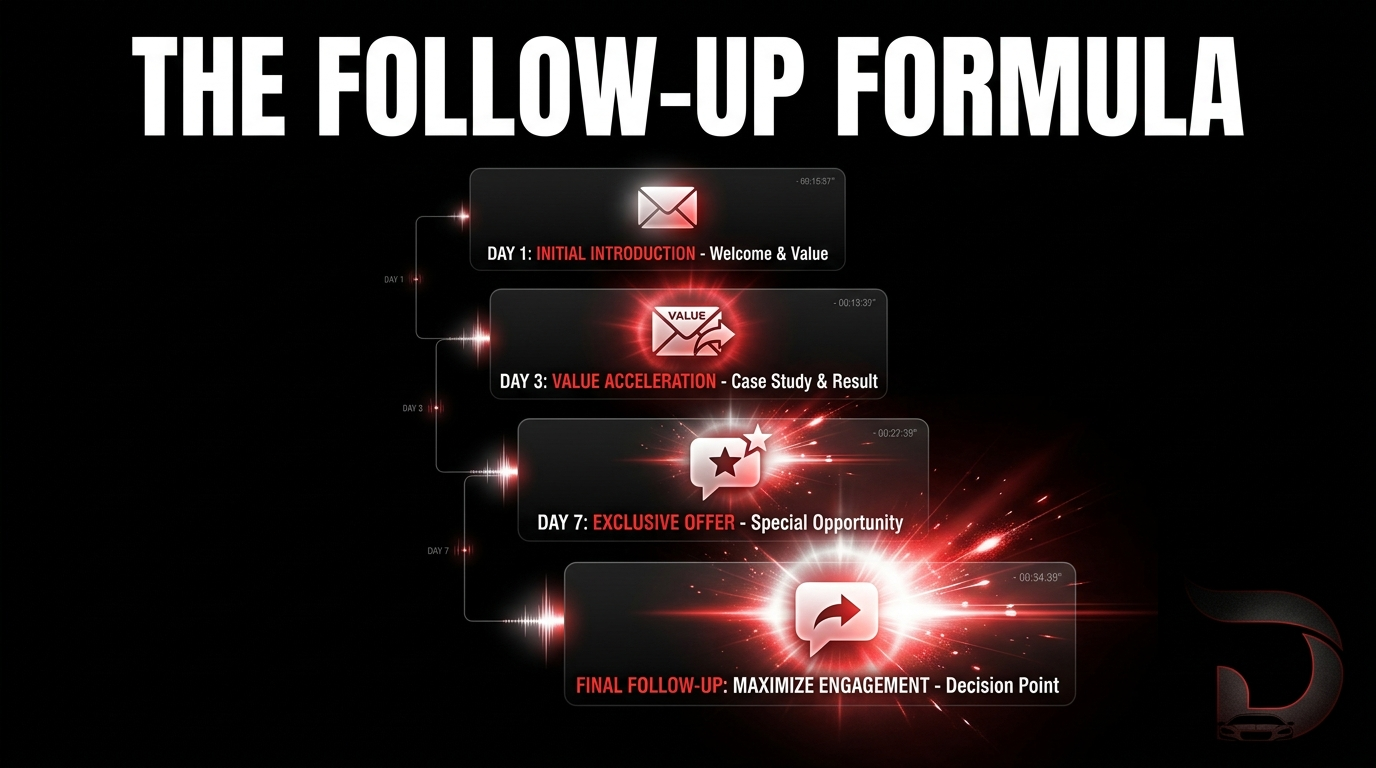
Below is the exact sequence used inside the Detail Dominion system. Every touchpoint is automated through the CRM and fires based on the lead's behavior — or lack of it. The sequence runs for 21 days before a lead is moved to a long-term nurture list rather than being discarded entirely.
Instant Confirmation Response
Fires within 60 seconds of form submission. Confirms receipt, sets expectations, and delivers a booking link for leads ready to move immediately.
Personal Check-In
Conversational and low-pressure. Acknowledges the inquiry and asks a single question to re-open the conversation. Short, direct, and easy to respond to.
Social Proof Delivery
Sends a relevant case study or set of reviews from a similar customer in the same area. Builds credibility and demonstrates results without a hard sell.
Value-Add Follow-Up
Offers something useful — a free inspection, a project estimate, a guide, or a relevant tip. Creates goodwill and gives the lead a new reason to engage.
Direct Outreach
A real phone call attempt at this stage. If no answer, immediately follow with a text. Human contact at this point converts a significant percentage of leads that have been warming through the earlier sequence.
Objection Handling
Addresses the most common objections for your service type — cost, timing, or finding the right contractor. Frames your business as the solution to each objection without being pushy.
Soft Urgency
Introduces a legitimate reason to act now — schedule filling up, seasonal timing, material pricing — without manufactured pressure. Gives the lead a clear reason to book this week rather than continuing to delay.
The Final Check-In
Short, direct, and zero pressure. Leaves the door open for the lead to re-engage on their timeline. Many leads convert at this stage simply because no other contractor has stayed present this long.
The Rules That Make the Formula Work
The sequence above only produces results when the underlying rules are followed. Violate them and the formula becomes noise — or worse, it damages the relationship before it ever gets a chance to close.
The 6 Rules of High-Converting Follow-Up
- Never follow up more than once per day. Multiple messages in the same day reads as desperate. Spacing creates professionalism and anticipation.
- Always vary the channel and the angle. Repeating the same message on the same channel produces diminishing returns. Each touchpoint should offer something new — a different angle, new information, or a different call to action.
- Keep SMS messages under 160 characters. Long texts get truncated and feel impersonal. Short, conversational messages feel human and get higher response rates.
- Never apologize for following up. Phrases like "sorry to bother you again" undermine your professional credibility. You are providing value. Own that.
- Always include one clear call to action. Every message should have exactly one thing you want the lead to do — not three. A booking link, a reply, or a phone call. One action per message.
- Automate everything but make it feel human. The most effective automated follow-up reads like a real person wrote it in the moment. Use first names, reference the specific service they inquired about, and avoid formal corporate language.
What Happens After Day 21
Leads that do not convert within the 21-day sequence are not lost — they are moved to a long-term nurture list. This list receives a monthly touchpoint: a relevant blog post, a seasonal offer, a project showcase from a recent job in their area, or a simple check-in. The timeframe for long-term nurture is 12 months.
The reason this matters: studies on home improvement purchases show that the average homeowner takes three to six months from initial inquiry to final decision on a major project. A lead who went quiet at Day 7 may be actively comparing quotes at Day 90 — and the contractor whose name they keep seeing is the one who gets the call when they are finally ready to move.
Long-term nurture costs almost nothing to run once it is automated. And the leads it converts are some of the highest-quality in the pipeline — homeowners who took their time, made an informed decision, and chose you specifically because you were the most consistent, professional presence throughout their entire research and comparison process.
"I used to think a lead that didn't call back was just not interested. Now I know they were just waiting for someone to follow up the right way. The automated sequence does it without me having to think about it — and the jobs that come in from the later follow-ups are always great clients. They took their time because they were serious."
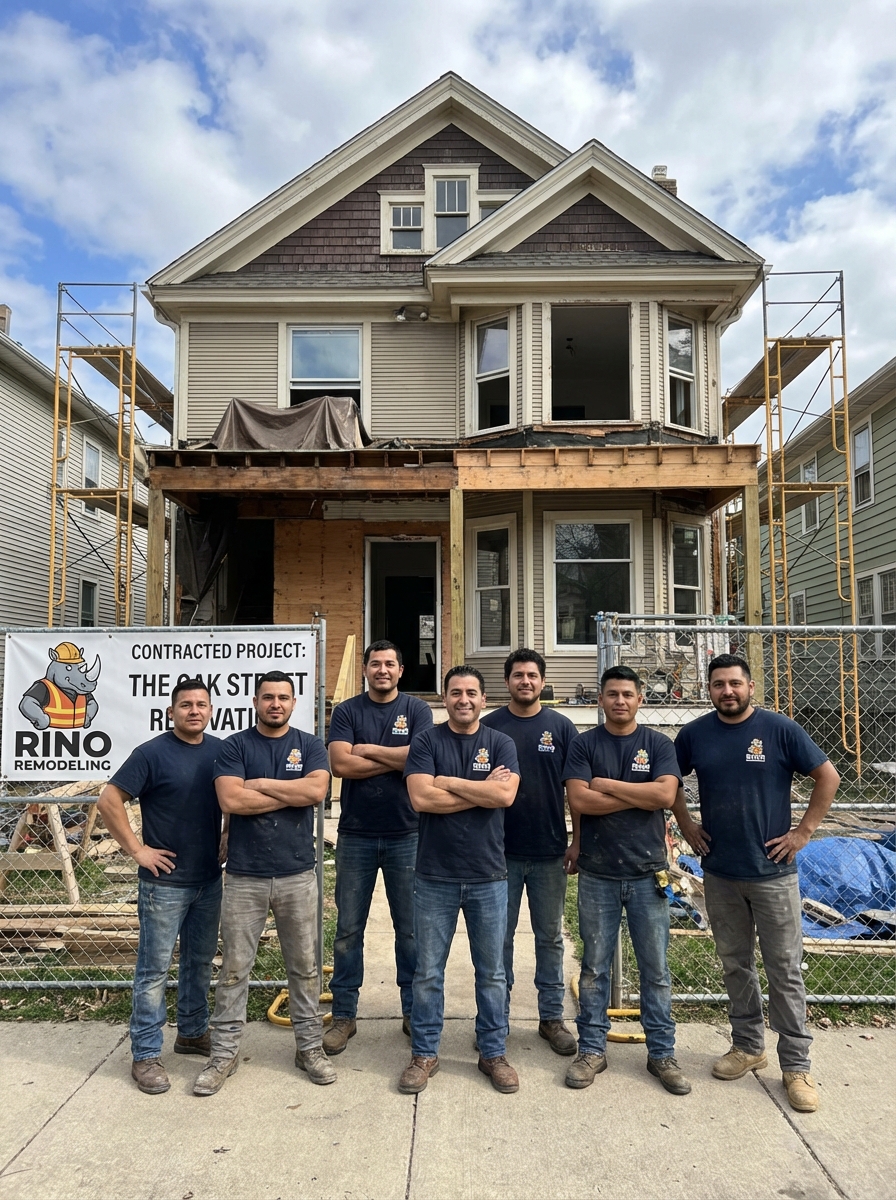
"The lead you gave up on at day two is the job your competitor closes at day fourteen."
— Detail DominionBuilding the Formula Into Your Business
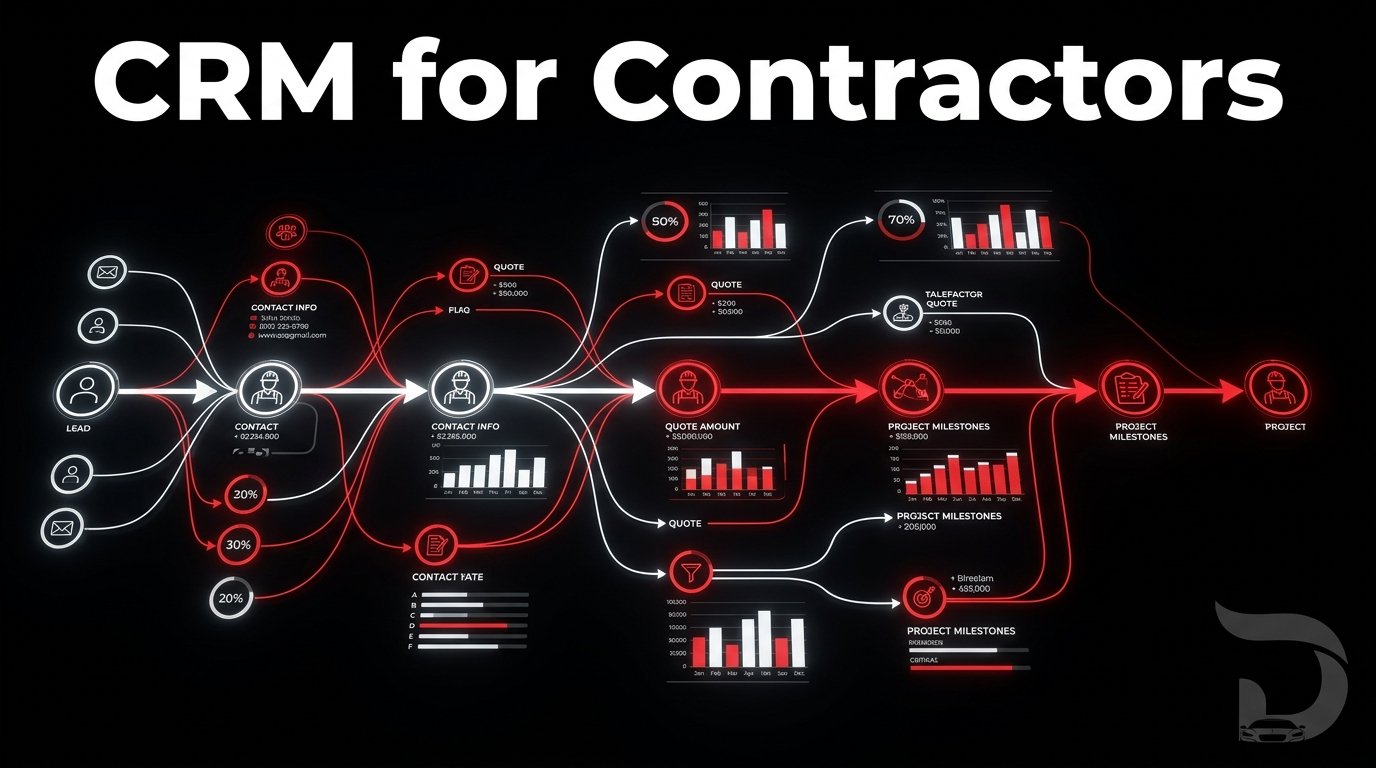
The 21-day formula above is not something you run manually. It is built inside a CRM — with automated triggers, channel integrations, and message templates pre-loaded — and activated the moment a lead enters your pipeline. Once it is set up, it runs without any manual input from your team. Every new lead gets the full sequence. No one falls through the cracks. No follow-up gets forgotten because someone was busy on a job site.
This is one of the core components of the Dominion Framework™ — and it is one of the primary reasons the contractors inside the system see close rates significantly above the industry average. The lead quality is higher because of AI qualification. The close rate is higher because of structured, automated follow-up that no competitor is running at the same level.
The revenue is already in your pipeline. The follow-up formula is what extracts it.